

बढ़ती जनसंख्या के लिए कैसे बढ़ाएं कृषि उत्पादन और रोजगार के अवसर । Career in Agriculture । Dr. S. R. Maloo
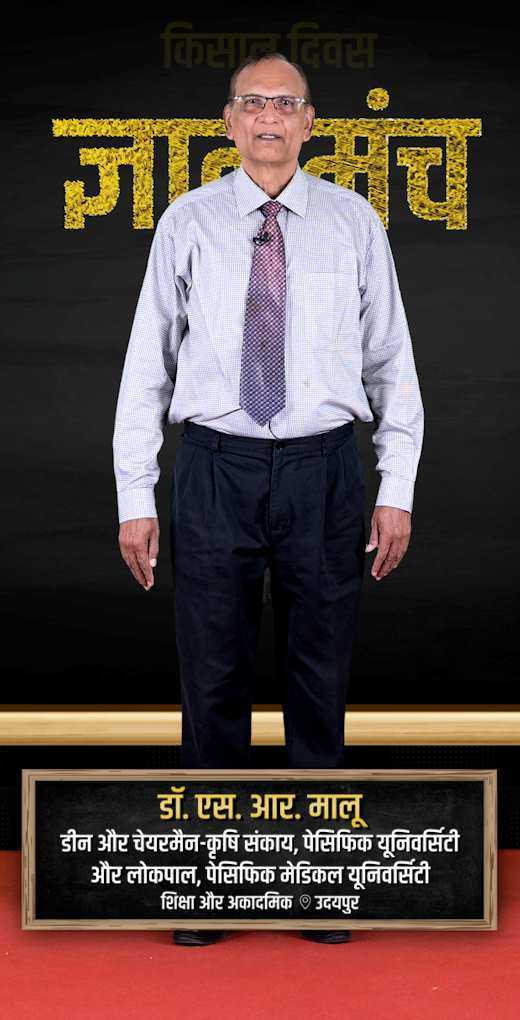
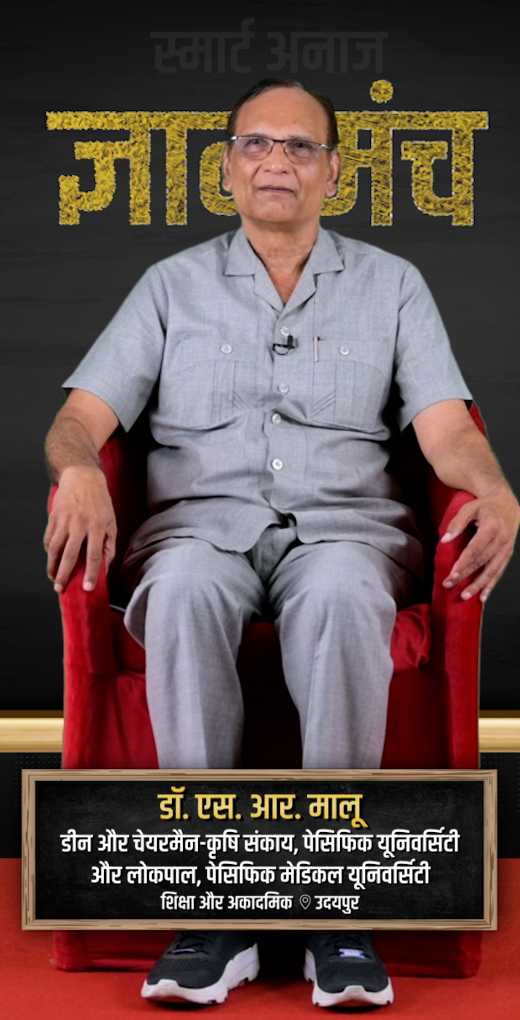
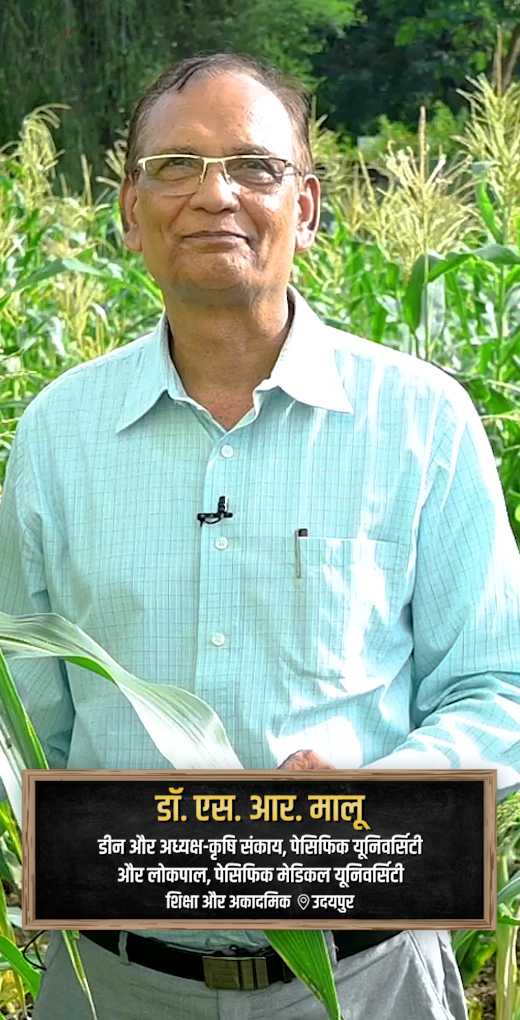
View my pageDr. S.R. Maloo, the esteemed Dean and Chairman of the Faculty of Agriculture at Pacific University, also serves as the Ombudsperson of Pacific Medical University in Udaipur.
With a wealth of knowledge and extensive experience in the field of agriculture, Dr. Maloo speaks on the Gyan Manch platform to share his insights and discuss the myriad career opportunities available in the agriculture sector. His speech reflects his deep commitment to advancing agricultural education and research in India, and his words resonate with those eager to explore the vast possibilities within this essential industry.
Dr. Maloo begins by emphasizing the agricultural richness of India, a country where agriculture forms the backbone of the economy. He highlights the fact that approximately 65% of India's population is engaged, either directly or indirectly, in agricultural activities or related work.
This involvement, he says, is what sustains the country, making agriculture not just an economic activity but a vital part of the nation's identity. Dr. Maloo underscores the need for the country to recognize the significance of agriculture and to continue nurturing it as a cornerstone of India’s prosperity.
As he delves deeper into the subject, Dr. Maloo points out that while India has achieved considerable success in agricultural production since gaining independence, there is still much to be done. He recalls that at the time of independence, India’s food grain production was around 50 million tons. Today, that figure has increased to 130 million tons, a testament to the hard work of farmers, government policymakers, scientists, and educational institutions.
This remarkable increase, he says, did not happen overnight but was the result of concerted efforts across multiple sectors. He emphasizes that education and research have been pivotal in driving this progress, allowing the country to not only meet its food requirements but also to excel in global agricultural production.
Dr. Maloo continues by noting the growing population of India and the challenges it poses to the agricultural sector. On a similar pace with the population increase, he highlights that India has managed to maintain, and even increase, its agricultural output. This, he believes, is a reflection of the dedication and innovation of those involved in the sector. However, Dr. Maloo stresses that the journey is far from over.
To continue feeding the nation, there must be a relentless pursuit of new technologies, education, and strategies. He calls for a collective effort to educate farmers, train scientists, and inform policymakers on how to embrace and implement these advancements.
In a historical context, Dr. Maloo refers to the famous slogan coined by Lal Bahadur Shastri, \"Jai Jawan, Jai Kisan\" (Hail the soldier, Hail the farmer), which was later expanded to include \"Jai Vigyan\" (Hail science). He then adds that a new element has been introduced to this slogan: \"Jai Anusandhan\" (Hail research). He explains that the addition of \"research\" signifies the growing importance of innovation and scientific inquiry in agriculture.
Dr. S.R. Maloo believes that to achieve higher levels of success in agriculture, India needs to develop a highly skilled and educated workforce. This can only be achieved by introducing students to new agricultural techniques, developing their skills, and encouraging them to become entrepreneurs. Education, he asserts, should not be limited to farmers but should also extend to the youth and other key stakeholders in the agricultural sector.
Addressing a pressing concern, Dr. Maloo speaks about the growing disinterest in agriculture among the youth. He acknowledges that many young people are turning away from agriculture, viewing it as less attractive compared to other career options. However, he remains hopeful that with the right educational programs and courses, students can be drawn back to agriculture. He mentions that the Indian Council of Agricultural Research (ICAR) has recognized this issue and has taken proactive steps to revamp the agricultural curriculum. These changes, made in alignment with the new National Education Policy, aim to prepare students to become the next generation of scientists, innovators, and leaders in agriculture.
Dr. Maloo then elaborates on the wide array of career opportunities available within the agricultural sector, emphasizing that these opportunities exist in both the public and private sectors. In the public sector, he mentions that the state government offers numerous opportunities through ICAR institutes, colleges, and various agricultural bodies. However, he also acknowledges that the public sector has its limitations.
In contrast, the private sector offers a broader range of opportunities, particularly in industries such as fertilizers and seeds, insecticides and pesticides, oil mills, cotton mills, sugar mills, and even the banking sector. He explains that the government has recognized the importance of formal education in agriculture by introducing a B.Sc. (Honors) in Agriculture as a professional degree. This degree ensures that individuals engaging in agricultural work are properly educated and qualified, much like how one must be qualified to open a pharmacy.
He highlights a notable trend where graduates from prestigious institutions like the Indian Institutes of Technology (IITs) are now entering the agricultural field. Dr. Maloo expresses his admiration for these individuals who bring their technical expertise to agriculture, thereby enriching the sector with new perspectives and solutions.
He also touches on the potential within the forestry sector, which offers numerous possibilities for those interested in agriculture and related fields. Dr. Maloo encourages collective efforts and urges more people to join the agricultural sector, stressing the need for everyone to contribute to the growth and development of this vital industry.
As he nears the conclusion of his address, Dr. S.R. Maloo emphasizes the importance of collaboration and unity in advancing agriculture. He believes that by working together, India can continue to thrive as a global leader in agricultural production. He calls on students, educators, policymakers, and industry leaders to come together, share knowledge, and innovate for the future. His vision is to see India’s agriculture sector flourish, driven by a well-educated, skilled, and dedicated workforce that is committed to making the country self-sufficient and prosperous in the years to come.
In summary, Dr. S.R. Maloo’s speech at Gyan Manch is a powerful reminder of the critical role that agriculture plays in India’s economy and society. His insights into the challenges and opportunities within the sector provide valuable guidance for those looking to pursue a career in agriculture.
By embracing modern education, research, and innovation, India can continue to build on its agricultural heritage and secure a bright future for its people. Dr. Maloo’s address serves as both a call to action and a source of inspiration, encouraging the next generation to take up the mantle and contribute to the ongoing success of India’s agriculture sector.
MORE VIDEOS BY Dr. S. R. Maloo












Aapki Digital Pehchan


We can. Bharat can.